Why Institutional Investors Are Pouring Into Dubai Right Now

There is a divergence forming in Dubai real estate. And it is worth understanding why.
On one side, retail investors are hesitating. You see it in the forums and the comment sections. People asking whether we are at a peak. Whether the regional situation changes anything. Whether waiting is the smarter play.
It is a natural instinct. Nobody wants to buy at the top.
But on the other side, the institutions are doing something different. They are buying. And not cautiously.
Institutional Activity, May 2026
Aldar completed a $300 million acquisition in Dubai Studio City. 312 units, six mid rise buildings. A clear bet on Dubai's rental market. See Knight Frank UAE Market Review for context on institutional capital flows into prime residential assets.
The Numbers Tell The Story
Majid Al Futtaim committed $16.8 billion to a new master community in Dubai South. 22 million square feet. That is not a tentative toe in the water. That is a declaration of conviction from one of the region's most experienced developers.
Nakheel awarded $950 million in contracts for Palm Jebel Ali villas. Emaar posted Q1 profits up 35 per cent. Off plan transactions rose 22 per cent year on year in the first quarter. 59 new projects worth Dh118.3 billion were launched despite the headlines.
Abu Dhabi recorded Dh66 billion in sales, up 160 per cent from last year. According to Dubai Land Department data, Q1 2026 transaction volumes are up 21 per cent year on year overall.
There is a gap between what retail investors are doing and what institutions are doing. And historically, institutions move on data, not emotion.
What The Institutions Are Seeing
Economic Fundamentals Are Solid
The Central Bank held rates at 5.40 per cent in May. Inflation is stable at around 2.1 per cent. The government announced a Dh1.5 billion stimulus package, bringing total economic support to Dh2.5 billion in under two months. These are not the actions of a market in trouble.
The ValuStrat index showed a 3.8 per cent quarterly decline. That is a cooling from overheated pandemic levels, not a crash. Volpi from The National put it well: wholesale distress selling has not become the defining behaviour. Markets mature. They do not collapse.
Data Point
Dubai's Digital Dubai index reports 9.81 per cent annual price growth. Resident investors now account for more than 50 per cent of market value. Handovers are running at approximately 10,000 units per month. The market is absorbing supply, not choking on it.
Infrastructure Is The Catalyst
The Gold Line Metro expansion at $9 billion will connect 15 districts. Al Maktoum International Airport is transforming Dubai South into a major international corridor. The Abu Dhabi infrastructure push at Dh209 billion is creating an integrated economic zone across the Emirates. These are decade long catalysts, not quarterly ones.
Institutional capital understands this. Infrastructure spending of this scale does not happen in markets headed for a downturn. It happens in markets where the government is confident enough to place long term bets.
The Rental Story Holds
Rents rose 2 per cent quarter on quarter. A population that keeps growing and a rental market that keeps demanding supply. Aldar's $300 million Studio City play was a rental income play, pure and simple. The maths worked. They did it.
The Gap Between Sentiment And Reality
The Colliers Q1 2026 UAE Market Report confirms that retail sentiment is cautious while institutional behaviour is bullish. This gap is where opportunity sits for the attentive investor.
Individual investors tend to move in herds. Institutions move when the numbers stack up. Right now, the numbers are stacking up.
The question is not whether Dubai real estate is sound. The institutions have already answered that one with billions of committed capital. The question is whether you are comfortable following the data or whether you prefer to wait until the herd catches up.
By the time the herd moves, the price of admission tends to be higher.
Strategic Consideration
Institutional capital deployment in Dubai is not a short term trade. It is a structural allocation to a market with strong fundamentals, sovereign level infrastructure investment, and a tax efficient framework. For the HNW investor, the strategic question is whether your portfolio is positioned alongside that capital or watching it from the sidelines.
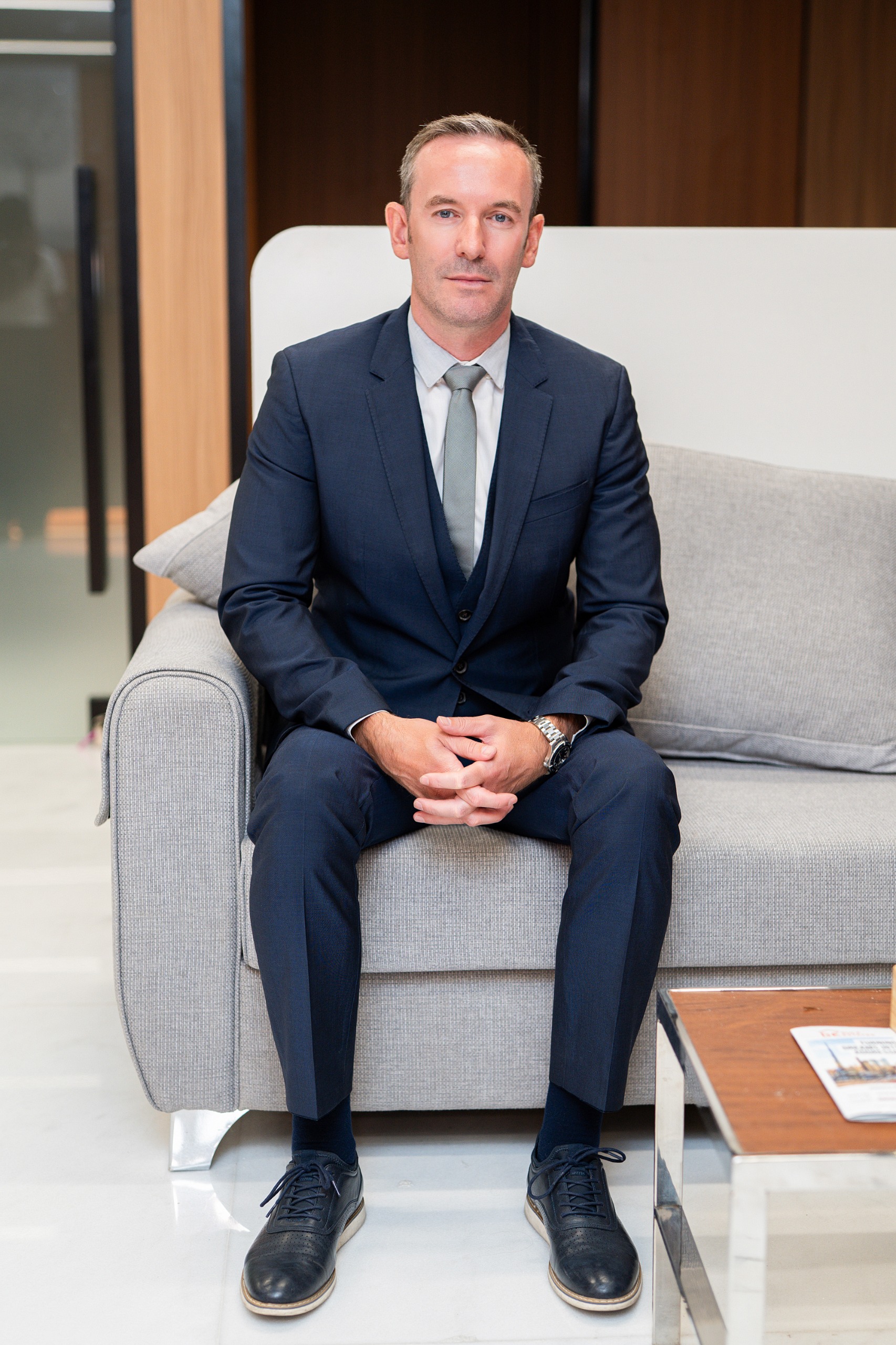
James Reid is founder of Regenesis Global. He has spent 20 years in real estate and works with clients on Dubai, Abu Dhabi, Ras Al Khaimah, and Bali investments.
Sources: The National (May 14 & April 27 2026), Gulf Digital News (May 19 2026), Knight Frank UAE Market Review, Colliers Q1 2026 Report, Digital Dubai, Dubai Land Department, WAM.