Dubai's Property Market Is Not Booming. It Is Diverging.

The temptation when you see 9.81% annual price growth across Dubai's residential index is to call it a boom. It is not the wrong word, exactly. But it misses the point.
The Dubai Real Estate Price Index, published by Digital Dubai, showed villas leading the charge at 14.83% annual growth. Apartments posted 7.38%. Commercial property rose 9.54%, with office space up 15.86%. These are strong numbers by any standard.
But the more interesting story is in the distribution.
Key Data Point
Digital Dubai's Residential Price Index: 9.81% annual growth for 2025. Villa segment: 14.83%. Apartment segment: 7.38%. The gap tells you where serious capital is landing. Source: Digital Dubai, Q4 2025.
What the Colliers Report Reveals
Colliers, in its Q1 2026 report on the UAE market, made an observation that deserves more attention. It described the sector as having entered "a new phase of balanced and sustainable growth following the exceptional momentum witnessed throughout 2025." That language matters. Balanced. Sustainable. These are not the words typically used to describe a bubble.
The report noted that Abu Dhabi's residential transactions reached around 7,800 deals in Q1, up 10% quarter on quarter and 119% year on year. Apartment prices rose 4% quarter on quarter and 32% annually. Villa prices rose 2% and 21% respectively. In the capital, office occupancy has pushed past 95%. Some categories are seeing rental growth between 8% and 20%.
In Dubai, the development pipeline remains substantial around 65,000 apartments and 12,500 villas expected by year end. But here is the key point: demand is not retreating from the top of the market. It is concentrating there.
Where Demand Is Concentrating
Bayut's data on post-disruption demand recovery is revealing. The strongest rebound is visible not in speculative low-end buying but in the AED 20 million to AED 50 million villa bracket and the AED 10 million to AED 50 million apartment band. These are not fringe segments. They are the core of Dubai's residential investment thesis.
Communities like Dubai Hills Estate, Palm Jumeirah, Emirates Hills and Jumeirah Beach Residence are leading the recovery. These are established addresses with track records. Buyers are voting for certainty over speculation, for infrastructure over promise.
What this tells us is that the buyer base has changed. It is more informed, more deliberate and more committed to quality. The market is rewarding conviction, not speculation. That is what maturity looks like.
Where the Recovery Is Concentrated
Bayut's demand analysis shows the strongest rebound in the AED 20M-AED 50M villa bracket and AED 10M-AED 50M apartment band. Communities leading: Dubai Hills Estate, Palm Jumeirah, Emirates Hills, JBR, Dubai Marina, Downtown, Arabian Ranches. Source: Bayut Market Demand Analysis.
The Prime Gap Is Widening
The gap between prime and secondary in Dubai is not a temporary phenomenon. It is a structural shift. The Knight Frank Wealth Report identifies this as a global pattern: capital allocation toward institutional-grade assets in stable geostrategic hubs is the leading hedge for family offices in 2026.
What does this mean for the individual buyer? The question is no longer whether Dubai prices will keep rising. It is whether the asset you are buying belongs in the part of the market where demand is concentrating. The gap between prime and secondary is widening, and the data says that is not about to reverse.
What This Means for Your Strategy
If you are looking at Dubai today, the question is not whether to buy. It is what and where. In a diverging market, selectivity matters more than timing. Quality assets in proven locations hold their value. Weak ones get repriced.
That is the opportunity in a market doing exactly what a maturing market should do. It is rewarding the people who pay attention to the distribution, not just the headline.
—
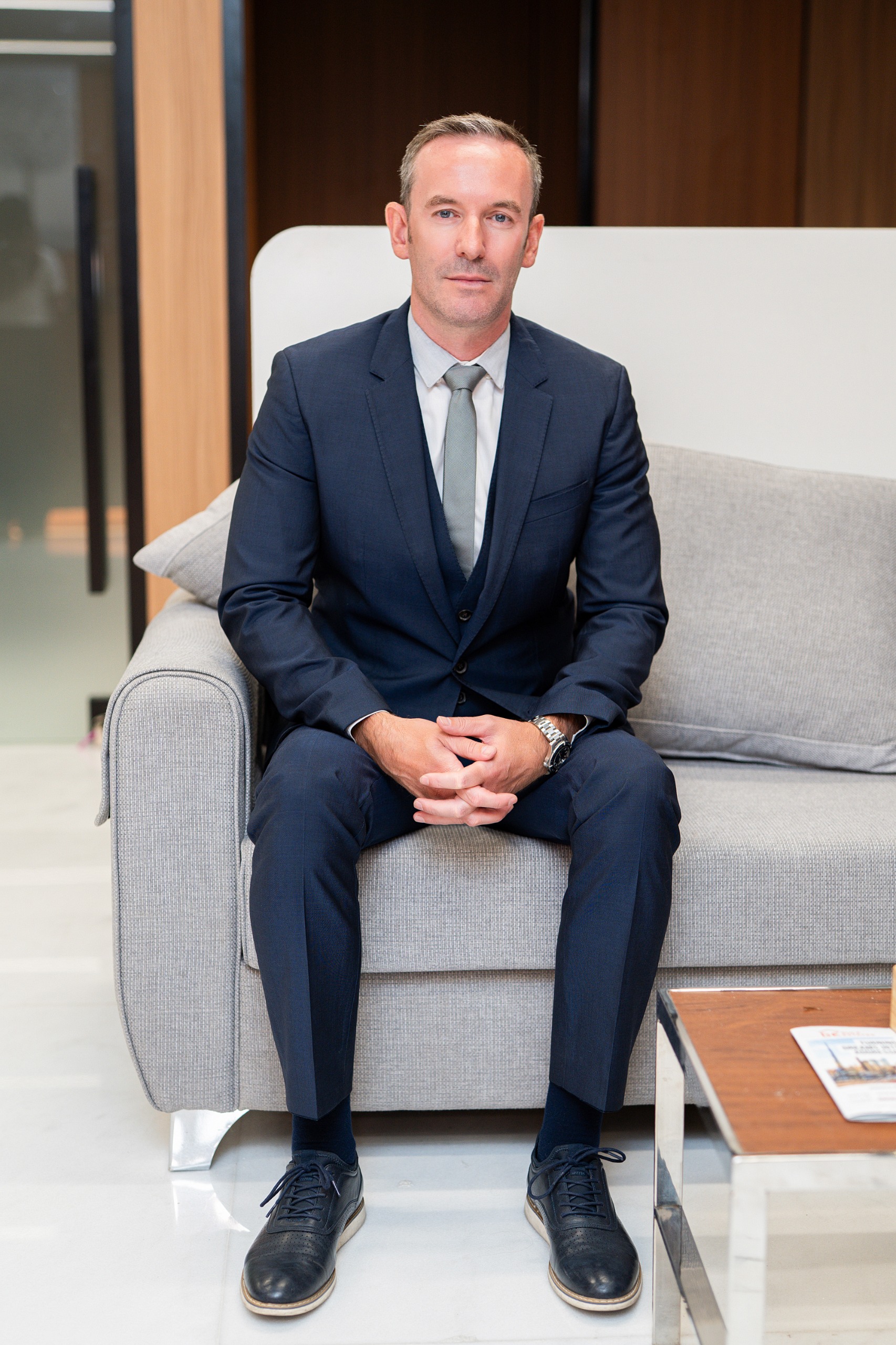
James Reid is founder of Regenesis Global. Based in Dubai. He has spent 20 years in global real estate, the last six in the UAE. He works with serious investors on UAE, Bali and Thailand markets.